Arts & Culture
Farewell to a Giant: Sonny Rollins Dies at 95
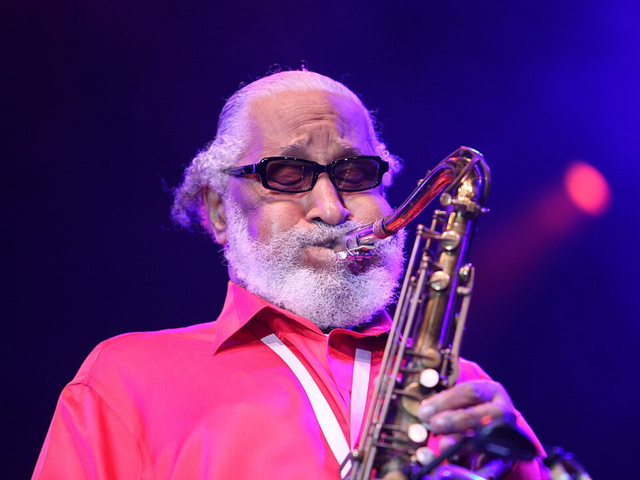
The world of jazz has lost one of its towering giants. Sonny Rollins, the fearless improviser, tireless innovator, and unmistakable tenor saxophone voice whose career stretched across seven decades, died Monday at his home in Woodstock, New York. He was 95. His death marks the end of an era. Rollins was one of the final living links to the golden age of bebop, the revolutionary jazz movement that transformed American music in the 1940s and 1950s. Alongside legends such as Charlie Parker, John Coltrane, Miles Davis, and Thelonious Monk, Rollins helped redefine what jazz could be; intellectually daring, emotionally raw, and endlessly exploratory. The Last Giant of Bebop A statement released by his publicist, Terri Hinte, described him as “The Saxophone Colossus,” a nickname that had followed Rollins since the release of his landmark 1956 album Saxophone Colossus. Though no official cause of death was announced, Hinte said Rollins had spent recent years largely confined to his home due to ongoing health problems. He had suffered from pulmonary fibrosis, a serious lung disease that forced him to retire from performing in 2012 and stop playing saxophone entirely two years later. For jazz fans around the globe, the loss feels monumental. Rollins was not simply a great saxophonist, he was widely regarded as one of the greatest improvisers in the history of music. Fellow saxophonist Branford Marsalis once called him “the greatest improviser in the history of jazz,” a sentiment echoed by generations of musicians who studied his fearless approach to melody and rhythm. Born Walter Theodore Rollins in Harlem on September 7, 1930, to parents from the Virgin Islands, he grew up surrounded by music. Initially inspired by jump blues star Louis Jordan, Rollins eventually gravitated toward the tenor saxophone after hearing the powerful sound of Coleman Hawkins. By the time he was a teenager, he was already performing professionally and sharing bandstands with future jazz royalty. From Harlem Prodigy to Jazz Revolutionary His rise through the jazz world was rapid. In the early 1950s, Rollins recorded with major figures including Bud Powell, Charlie Parker, and Miles Davis. But it was during the mid-1950s that he emerged as a transformative force in his own right. Albums such as Tenor Madness, Way Out West, and especially Saxophone Colossus established him as one of jazz’s defining voices. His compositions “St. Thomas,” “Oleo,” “Doxy,” and “Airegin” would go on to become enduring jazz standards. Yet despite the acclaim, Rollins remained famously dissatisfied with himself. Throughout his life, he referred to himself as “a work in progress.” Unlike many artists who settle into a signature style, Rollins constantly pushed himself toward new ideas, often abandoning successful approaches in search of deeper expression. That restless spirit led to one of the most mythic chapters in jazz history. In 1959, at the height of his fame, Rollins abruptly stepped away from performing because he felt his playing had stagnated. For more than two years he practiced alone on New York City’s Williamsburg Bridge, often for up to 15 hours a day. The bridge offered privacy and space, but it also became symbolic of Rollins’ relentless pursuit of artistic growth. The Musician Who Never Stopped Searching When he returned in 1961 with the album The Bridge, critics recognized a musician transformed. His improvisations had become even more expansive, adventurous, and emotionally searching. Over the following decades, Rollins continued to evolve, incorporating calypso rhythms, funk, avant-garde experimentation, and even electronic textures into his music. He also remained a commanding live performer well into his later years. Throughout the 1990s and 2000s, Rollins toured internationally and released acclaimed recordings including This Is What I Do, which won the Grammy Award for Best Jazz Instrumental Album in 2001. A second Grammy followed in 2006 for his solo on “Why Was I Born?” from the live recording Without a Song: The 9/11 Concert. Beyond awards, Rollins received nearly every major honour available to an American artist. He was named a Jazz Master by the National Endowment for the Arts, received the National Medal of Arts, earned a Kennedy Center Honor, and saw Saxophone Colossus inducted into the National Recording Registry of the Library of Congress. Still, perhaps Rollins’ greatest legacy was his refusal to stop searching. Even after decades of acclaim, he continued to question himself, practice obsessively, and chase new musical possibilities. “Every time I pick up the horn, I want to hear something fresh,” he once said. With the death of Sonny Rollins, jazz loses not only one of its greatest musicians, but one of its most fearless seekers. His sound — bold, probing, joyous, and deeply human, changed the language of jazz forever. Even in silence, the echo of his horn will continue to resonate across generations.